
A good haircut should look intentional without demanding too much effort every day. The combination of a forward fringe and faded sides makes the French crop an appealing choice for people who prefer a modern, clean appearance. A French crop fade combines the recognizable crop shape with a gradual reduction in hair length along the sides and back. The fade can sit low, medium, or high, allowing the haircut to look subtle or more dramatic.
The top may be short and neat, heavily textured, or naturally wavy. The fringe can also be blunt, choppy, or slightly irregular. This guide explores the most popular variations, how to choose a suitable fade, and how to communicate your preferences to a barber.
What Is a French Crop Fade?
A French crop fade features a short top, a fringe directed toward the forehead, and sides that gradually become shorter. The fade creates a cleaner transition than a traditional crop with uniformly trimmed sides.
The exact appearance depends on where the fade begins and how much length remains on top.
Main Features
- A short, forward-facing fringe.
- A textured or relatively smooth top.
- Gradually shortened sides and back.
- A fade that can be low, medium, or high.
- Optional sharp edges or a natural hairline.
The goal is to balance the compact top with the side profile. A good fade should complement the shape of the head rather than distract from the haircut.
Why Choose a Crop with a Fade?
Faded sides create a defined silhouette and can make the top appear more prominent. This contrast works particularly well with textured hair because the movement on top stands out against the shorter sides. The style is also customizable. A low fade can look understated, while a high fade creates a more noticeable contrast.
For people who prefer simple grooming, the short top can be easy to style. A small amount of paste may be enough to define the fringe and separate the layers. However, a very close fade can require frequent barber visits. Choose a fade height that fits your preferred appearance and maintenance schedule.
Popular French Crop Fade Variations
Low French Crop Fade
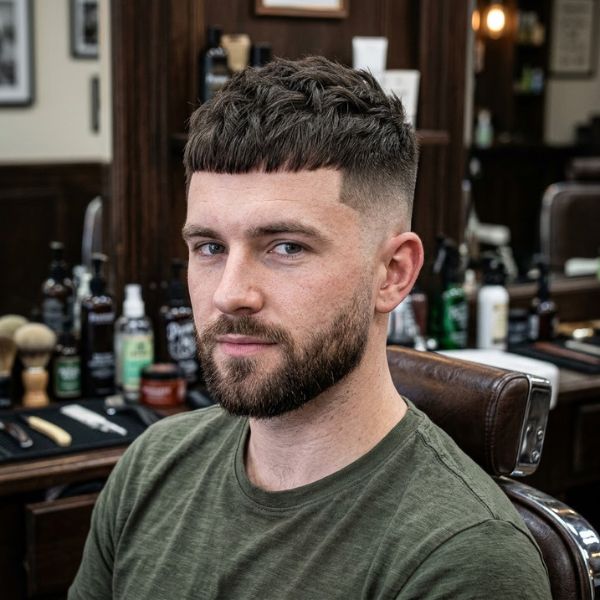
The low variation keeps the fade close to the lower sides and neckline. It preserves more hair around the temples, creating a balanced appearance.
This is a useful option for people who want a modern haircut without an excessively high-contrast finish.
Mid French Crop Fade
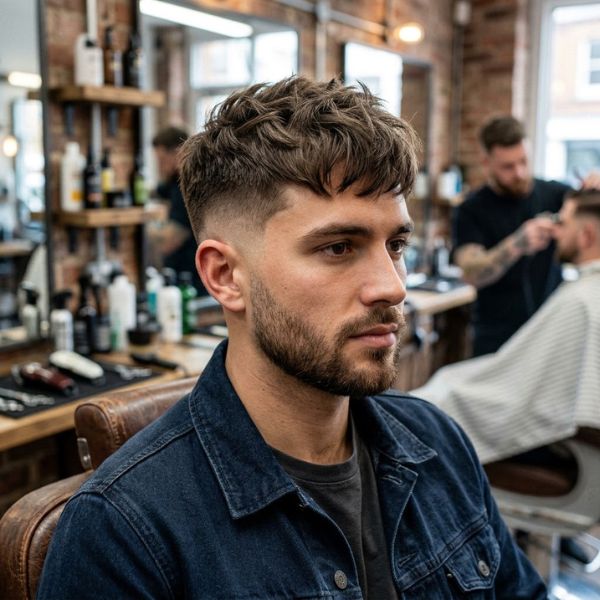
A mid fade starts higher than a low fade, creating a more noticeable transition along the sides.
It works well with short, textured tops and can give the haircut a more defined profile.
High French Crop Fade
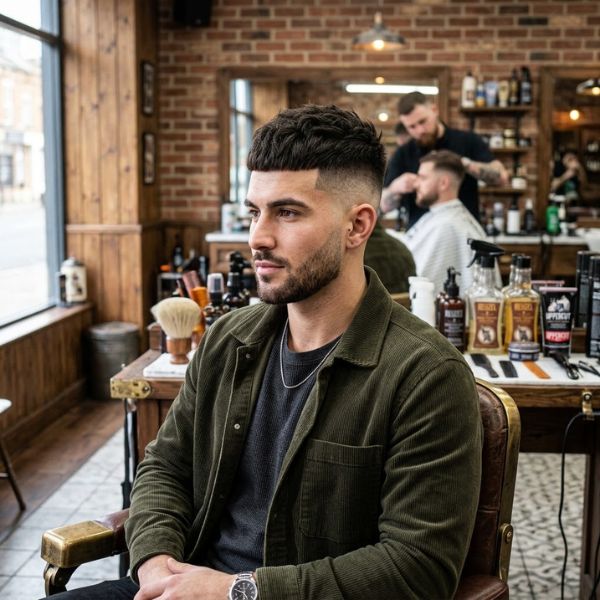
A high fade creates a stronger contrast by shortening the sides higher up the head. The top and fringe become the main visual focus.
This variation can look bold, but it may not match everyone’s preferred proportions. Bring a reference photograph to help your barber determine the right height.
Skin Fade Crop
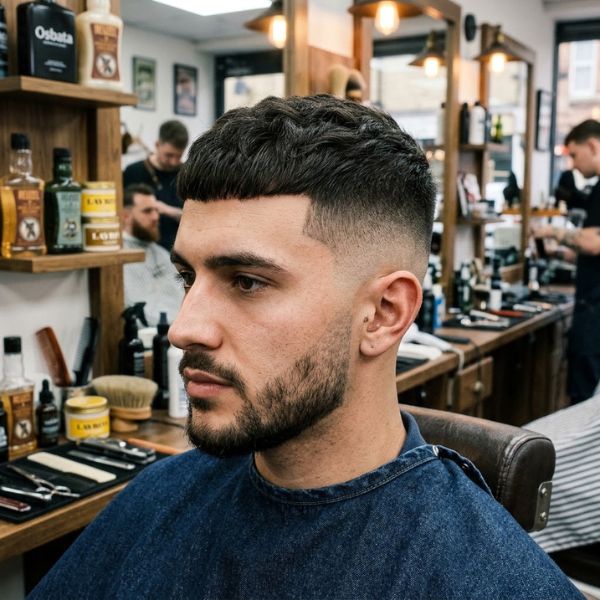
A skin fade gradually reduces the hair to bare skin near the bottom. It produces a sharp, high-contrast appearance.
Because the sides become visibly grown out relatively quickly, this version may need more frequent maintenance than a softer taper.
Textured Crop Fade
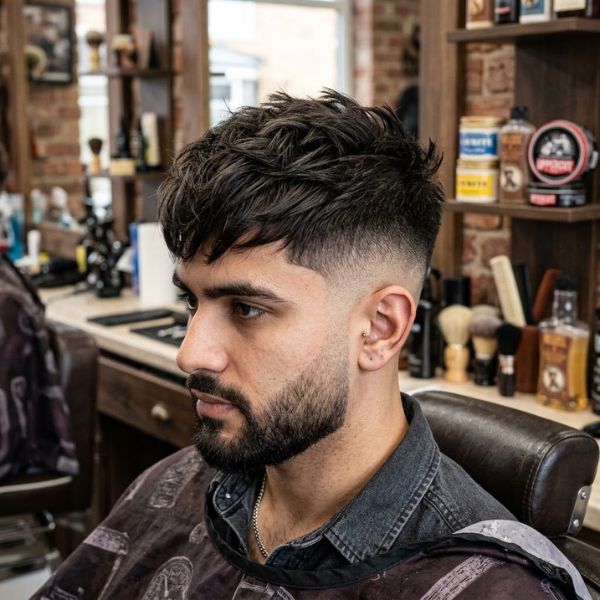
The textured version uses uneven layers and separated sections on top. The fade keeps the sides neat while the top provides movement.
A matte product can emphasize the texture without adding excessive shine.
Curly Crop Fade
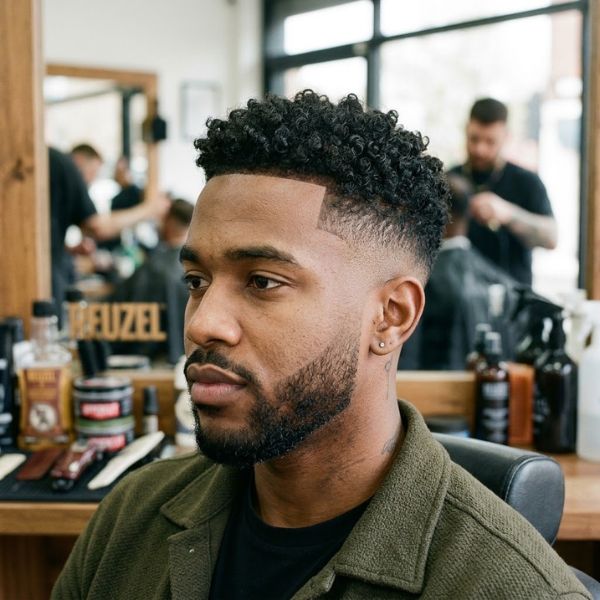
Natural curls create fullness and movement through the top. The fade removes some bulk from the sides, helping define the overall shape.
Ask the barber to consider curl shrinkage and avoid cutting the fringe too short when the hair is wet.
Wavy Crop Fade
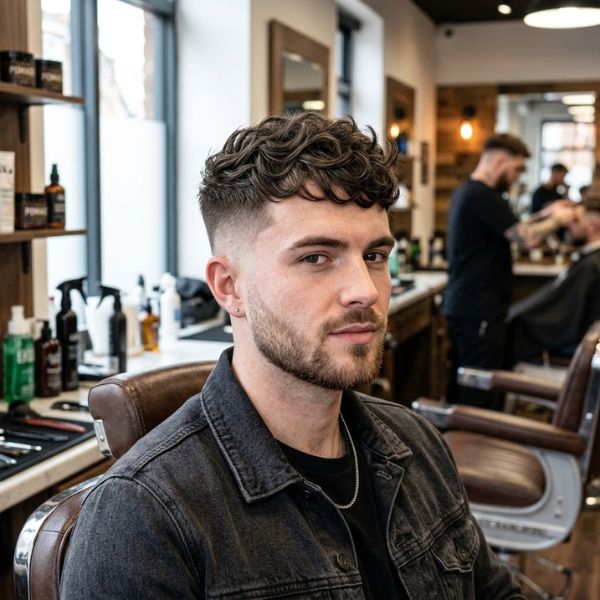
Wavy hair provides natural texture without requiring a complicated styling routine. A soft fringe can complement the waves, while faded sides maintain a clean silhouette.
A lightweight cream can help control frizz while preserving movement.
Blunt Fringe Fade
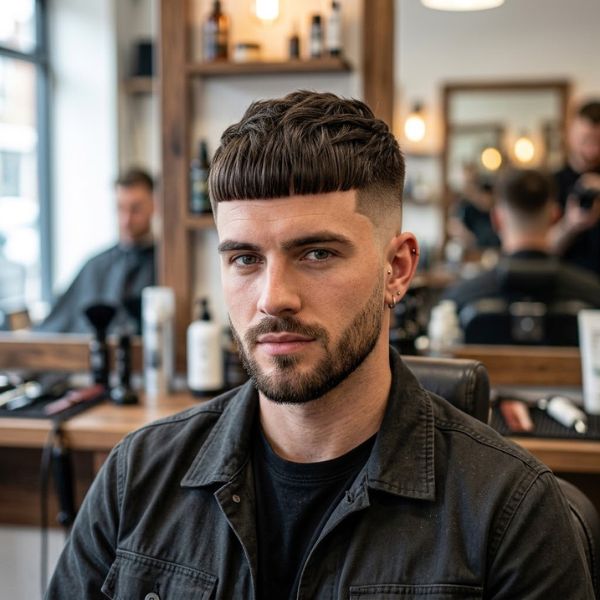
This version uses a more uniform front edge. It creates a graphic appearance that contrasts with the gradual fade.
The fringe length should be chosen carefully because even small changes can affect the overall balance.
Choppy Fringe Fade
The choppy version breaks the fringe into distinct sections. It creates a more relaxed appearance than a straight, blunt edge.
This option can work particularly well with a textured top and a low or mid fade.
Crop Fade with a Beard
A beard can complement the haircut by adding definition around the jaw. A short crop may work with light stubble or a fuller beard.
Keep the beard and sideburn transitions coordinated for a balanced finish.
Crop Fade with a Line-Up
A line-up adds sharper edges around the forehead and temples. It can make the overall haircut look more structured.
The line should follow your natural hairline and suit your features.
Choosing the Right Fade Height
The fade height changes the haircut’s overall character.
Choose a Low Fade If You Prefer a Subtle Look
A low fade preserves more hair on the upper sides. It is a good choice if you want a neat haircut without a strong contrast.
Choose a Mid Fade for a Balanced Appearance
A mid fade creates a clear transition while retaining flexibility in the top length and fringe.
It can be a useful middle ground for people who are uncertain about going higher.
Choose a High Fade for Stronger Contrast
A high fade places more emphasis on the top. It may suit people who prefer a sharper, more striking haircut.
Before choosing it, discuss how it will interact with your head shape, hair density, and desired side profile.
Read More: 21 Trendiest Messy French Crop Haircuts for Men (2026)
How to Choose the Right Crop for Your Face Shape
Oval Face
Oval faces can often accommodate a variety of fade heights and fringe styles. Choose the version that best matches your personal preferences.
Round Face
A textured top can create additional visual definition. A mid fade may provide a balanced outline, although the best height depends on individual proportions.
Square Face
A crop with defined sides can complement a strong jaw. A softer fringe may reduce the appearance of rigidity, while a blunt fringe creates a more graphic finish.
Long Face
A forward fringe can help balance forehead length. Avoid excessive height on top if your goal is to keep the face looking proportionate.
Heart-Shaped Face
A softer fringe and balanced side proportions can complement a wider forehead and narrower chin. Ask your barber to avoid making the upper section unnecessarily broad.
What to Tell Your Barber
A haircut name does not always communicate the exact result you have in mind. Bring a reference photograph and discuss the details.
- Specify whether you want a low, mid, or high fade.
- Explain how short you want the top.
- Choose a blunt, textured, or choppy fringe.
- Describe how much scalp visibility you prefer.
- Ask for a smooth transition between the top and sides.
- Mention your natural cowlicks or uneven hair growth.
- Discuss how often you can return for maintenance.
If you have fine hair, ask the barber to preserve enough density. If your hair is thick, controlled texturing may help reduce excess bulk.
How to Style a French Crop Fade
This haircut is usually straightforward to style because the top remains relatively short.
- Start with clean, towel-dried hair.
- Direct the top toward the forehead.
- Use your fingertips to create the desired texture.
- Apply a small amount of matte paste or styling clay.
- Separate the fringe if you prefer a choppy finish.
- Leave the hair natural if it already falls into place.
A blow dryer can help manage stubborn sections. Use moderate heat and avoid excessive drying.
Best Products for Different Hair Types
- Fine hair: Lightweight paste or a product that does not flatten the top.
- Thick hair: Matte clay or paste for separation and control.
- Wavy hair: Lightweight cream to preserve movement.
- Curly hair: Curl cream suited to your hair’s needs.
- Oily hair: A small amount of product to avoid a heavy finish.
Begin with less product than you think you need. Add more only if the hair requires additional hold.
Maintenance Tips
The fade often loses its sharpness before the top becomes difficult to style.
- Book trims every two to four weeks if you want a consistently crisp fade.
- Consider longer intervals if you prefer a softer, grown-out look.
- Keep the fringe at a comfortable length.
- Use shampoo and conditioner appropriate for your hair.
- Avoid excessive heat and heavy products.
- Ask your barber to repeat the fade height you liked previously.
A skin fade generally requires more frequent upkeep than a softer low fade.
Common Mistakes to Avoid
- Choosing the wrong fade height: A high fade can produce a much bolder result than expected.
- Cutting the top too short: The fringe may become difficult to style.
- Over-thinning the hair: Fine hair can lose the fullness needed for texture.
- Using too much wax: Heavy product can make the top look greasy.
- Ignoring curl shrinkage: Curly hair may appear shorter once dry.
- Expecting a fade to stay sharp indefinitely: Hair growth naturally softens the transition.
Frequently Asked Questions:
Is the French crop fade suitable for straight hair?
Yes. Straight hair can create a clean, defined fringe. Texturing can add movement if the hair appears flat.
Can men with curly hair wear this haircut?
Yes. The barber should work with the curl pattern and account for shrinkage when cutting the fringe.
Which fade is easiest to maintain?
A low fade generally grows out more subtly than a very close skin fade. The best choice depends on how sharp you want the sides to remain.
Does a crop fade work with a beard?
Yes. A short beard or stubble can complement the haircut when the proportions are balanced.
How often should I get it cut?
Many people choose a trim every two to four weeks for a crisp fade. A softer version may need less frequent maintenance.
Can I style it without a blow dryer?
Yes. Many versions can be arranged with your fingers and a small amount of product, or worn naturally.
Final Thoughts
A French crop fade combines a short forward fringe with a clean side profile. The fade height, top texture, and fringe shape allow you to personalize the haircut without losing its defining character.
Choose the fade that fits your preferences, discuss your hair type with your barber, and keep your styling routine simple.
The right combination can provide a modern, versatile haircut that looks intentional and remains practical for everyday life.